What Is Occupational Therapy for Children?
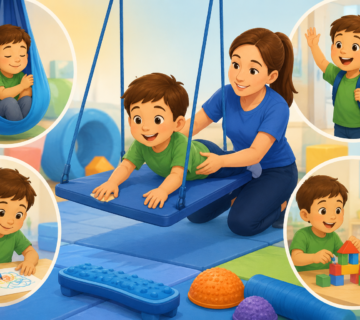
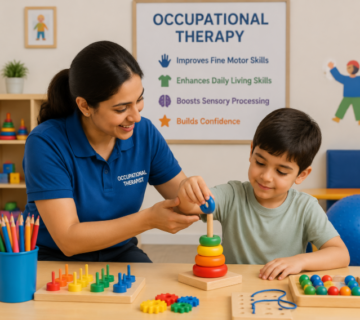
Occupational therapy helps children play, improve school performance and manage daily activities on their own. It builds fine motor skills so a child can grasp objects, develop handwriting and use everyday tools without needing help every time.OT also covers self-care, sensory processing and attention.These are the areas that quietly make everything else harder when they’re not working right and the ones that respond well to early structured support.
According to Dr.Sushant D.Sarang, Occupational Therapist in Navi Mumbai,”Occupational therapy for children isn’t about fixing them.It’s about understanding exactly where a skill broke down and building it back up from that point.”
What Does Occupational Therapy Actually Help Children With?
Parents usually come in thinking OT will address one specific thing.It rarely stops there.
- Fine Motor Skills:Gripping a pencil, cutting with scissors, doing up buttons and using a spoon.These need hand-brain coordination that develops at different rates in different children. OT finds exactly where that coordination is breaking down and starts there. Not from the top of the skill but from the actual gap.
- Play Skills:Play is how children figure out the world around them. A child who can’t regulate sensory input or coordinate their hands properly often can’t get into play the way other children do. OT works on whatever is blocking access to play specifically for that child.
- School Performance:Handwriting that wears a child out halfway through a lesson. Sitting still for two minutes before something breaks. Attention that teachers read as attitude. OT looks for the processing issue sitting under these things when everything else has already been tried.
- Self-Esteem and Independence:A child who can dress themselves and manage their school bag and keep up in the classroom carries themselves differently. This change in how a child sees what they’re capable of is something families notice before any formal measurement picks it up.
A proper occupational therapy assessment maps what needs attention before any sessions begin. If sensory issues are part of what’s going on the blog on sensory integration therapy covers how that gets handled.
Which Children Actually Benefit From OT?
Parents often wait months because they’re not sure the problem is real. Here is what tends to push families toward getting an assessment:
- Children Who Struggle With Handwriting: Painful and exhausting to produce rather than just untidy. A child who avoids writing tasks or complains of hand cramp after a few sentences usually has something specific going on with fine motor function or sensory processing that OT can identify.
- Children With Sensory Sensitivities: Tags and seams and food textures and loud rooms causing genuine daily distress. Sensory integration therapy runs alongside OT for children where sensory processing is a significant part of the picture.
- Children Falling Behind at School for No Clear Reason: Clearly capable but can’t produce written work or follow classroom instructions or stay in their seat through a lesson. OT often finds what everyone else missed.
- Children Who Still Need Full Adult Help With Basic Tasks: Getting dressed and managing meals at an age when other children handle these independently. Usually motor planning or sensory processing or a combination of both.
Children don’t need a formal diagnosis before starting OT. An assessment identifies what is present and builds from there. Read more on sensory integration in autism.
Why Choose Tender Touch Therapy Clinic?
Dr. Sushant D. Sarang holds a PhD Scholarship in Occupational Therapy with Sensory Integration certification at Level I and IV from the USA and has been running T3 Clinic since 2007 across four Navi Mumbai locations.Six occupational therapists on the team. That is a long time to spend working only with children.
Every child gets a written individual assessment before sessions start. Therapy is built around how that specific child is functioning and gets adjusted as things shift. If something is not producing results it gets changed. Parents receive updates on what is being worked on and what is changing.
FREQUENTLY ASKED QUESTONS
Does a child need a diagnosis to start occupational therapy?
No, OT assessment identifies difficulties and guides treatment regardless of formal diagnosis.
How is occupational therapy different from physiotherapy for children?
Physiotherapy targets movement and strength; OT focuses on functional daily skills and sensory processing.
How long does a child’s occupational therapy assessment take?
A full OT assessment typically takes one to two sessions depending on the child’s age and needs.
Can occupational therapy help a child who struggles only at school?
Yes, school-specific difficulties in attention, writing, or behaviour often respond directly to OT intervention.
References
- World Health Organization — Rehabilitation for Children
- American Occupational Therapy Association — Children and Youth