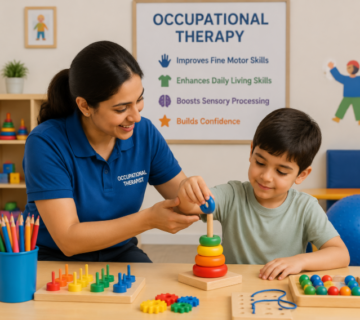
Sensory Integration Therapy (SIT) helps children process information coming from their senses touch, sound, movement, balance and body awareness. When that processing misfires, the brain either over-responds or under-responds to input most people handle without thinking. SIT trains the brain to receive those inputs more accurately. For families living with daily meltdowns, rigid routines and a child who struggles to get through a morning, that shift in processing changes everything.
According to Dr. Sushant D. Sarang, Occupational Therapist in Navi Mumbai at Tender Touch Therapy Clinic, “Sensory integration therapy changes how the nervous system handles input over time. That is what produces lasting change in daily function, not just short-term calm.”
What Does Sensory Integration Therapy Actually Target?
Every child’s sensory profile is different. SIT sessions are built around what that child’s assessment found, not a standard protocol applied to everyone.
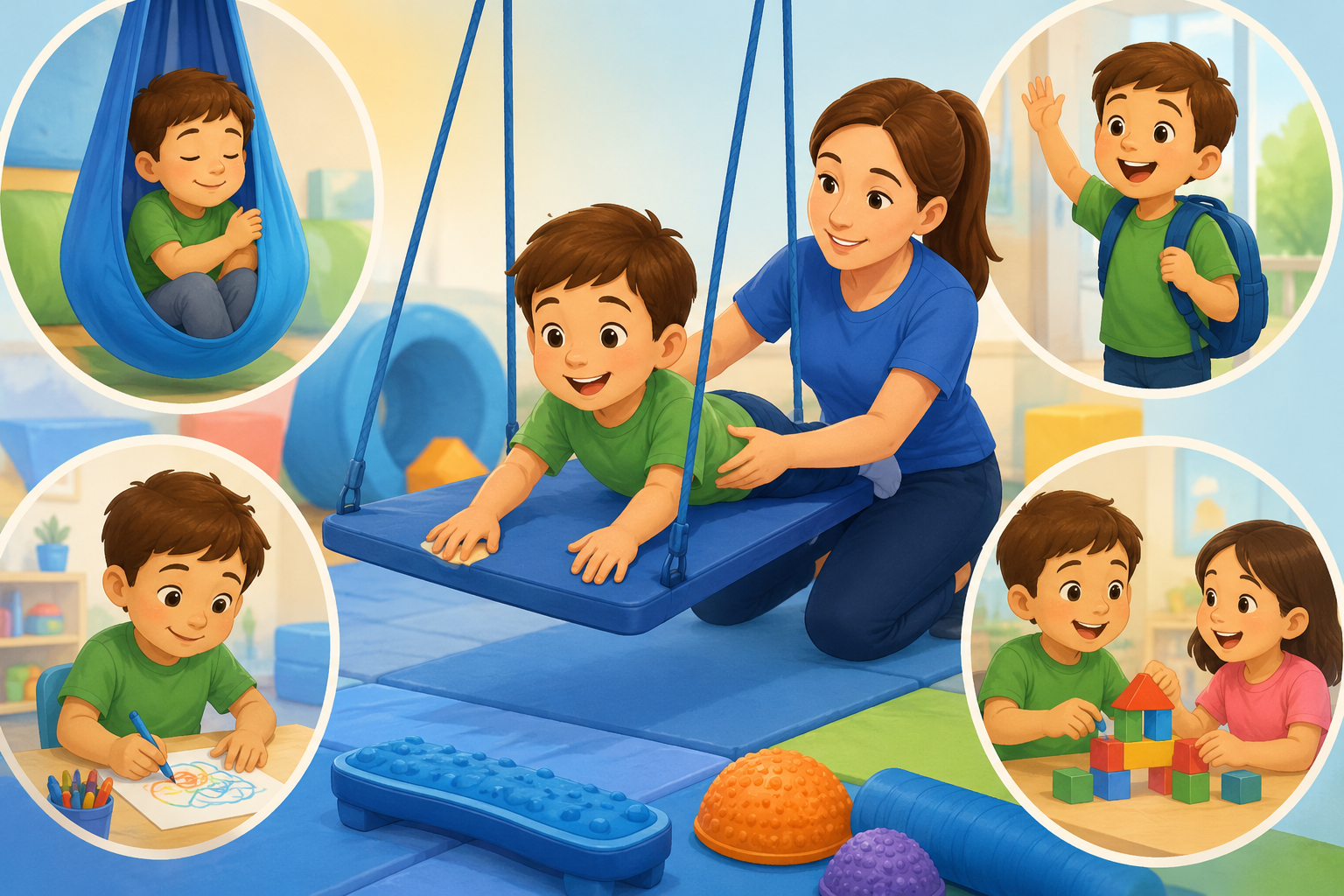
Tactile processing: Some children cannot tolerate clothing textures, resist being touched or react strongly to things that others barely notice. Therapy introduces graded tactile input gradually, giving the nervous system repeated exposure until the defensive response reduces.
Vestibular and proprioceptive input: A child who constantly crashes into furniture, hangs off things or cannot stay seated is often chasing input their system is not getting any other way. SIT provides that input in structured, directed ways rather than leaving the child to find it themselves.
Auditory processing: Filtering background noise from relevant information is something many children with sensory difficulties cannot do automatically. The classroom becomes unmanageable before the lesson starts. Therapy works on how the system sorts and prioritises what it hears.
Regulation and attention: Constant sensory overload burns through a child’s capacity to regulate, focus and engage. Address the sensory load and attention often improves without being directly targeted at all.
Children with sensory difficulties affecting school, mealtimes or peer relationships benefit most from starting SIT sessions early, before avoidance patterns become the child’s default response.
What Changes Do Families See After Sensory Integration Therapy?
The shifts tend to appear in ordinary moments before anyone formally marks progress. A parent notices the morning went differently. Then it happens again.
Getting dressed stops being a battle. The child who would dissolve over a sock seam or a tag starts managing clothing without the daily standoff. It is a small thing that makes an outsized difference to how the day begins for everyone.
At school, something settles. Teachers often flag it before parents do the child is attempting work they previously refused, staying in the seat longer, less distracted by the noise around them. The sensory load that was consuming their attention has reduced enough for learning to get through.
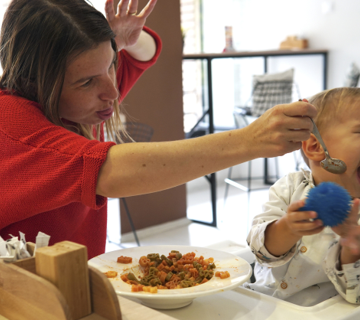
Food becomes less of a flashpoint too. Children who gagged at textures or ate from a list of five foods start tolerating a wider range, slowly. Families who had quietly given up on shared meals find them becoming possible again.
Peer interaction opens up. The child who avoided physical contact, group games or noisy birthday parties starts engaging at the edges first, then more fully. The threshold shifts.
What changes underneath all of this is capacity. The child’s system is not running at its limit all day, every day. Meltdowns reduce. Recovery after difficult moments gets faster. Daily life improving through SIT follows the same core principles whether the child has autism, ADHD or a standalone sensory processing difficulty. For children on the spectrum, SIT for autism covers how these improvements play out in that specific context.
Why Choose Tender Touch Therapy Clinic?
Dr. Sushant D. Sarang is a PhD Scholar in Occupational Therapy with Sensory Integration certification at Level I and IV from the USA. He founded T3 Clinic in 2007 and has run the clinic across four Navi Mumbai locations for nearly two decades. Six therapists work exclusively with children, with over 2 lakh therapy sessions delivered to date.
Before any sessions begin, every child receives a written sensory assessment. It identifies which systems are over-responding, which are barely registering, and where those patterns are causing the most disruption in that child’s actual day. The programme is built from there. Parents hear after every session what was worked on and what moved. If the approach stops producing results, it changes.
If your child is struggling with sensory overload, meltdowns or daily routines, an assessment is the right first step. Book a consultation with T3 Clinic today.
FAQs
How long does sensory integration therapy take to show results?
Eight to twelve weeks of consistent weekly sessions is the window where most families notice measurable changes. How quickly things shift depends on the child’s specific sensory profile and how established the difficulties are.
Does a child need an autism diagnosis to access sensory integration therapy?
No diagnosis is required. SIT works on sensory processing difficulties directly, regardless of what label is or is not attached. ADHD, developmental delay and sensory processing disorder all respond to the same core approach.
At what age should sensory integration therapy start?
Children as young as two can begin, and earlier tends to mean faster gains. That said, older children respond well too the work is the same either way.
Can sensory integration therapy help with school performance?
It tends to, though not by targeting academics directly. When the sensory load reduces, the child has more capacity available for paying attention, staying regulated and engaging with what is being taught.
References
- Sensory Integration and Activities of Daily Living in Children PMC: https://pmc.ncbi.nlm.nih.gov/articles/PMC3395584/
- Effectiveness of Sensory Integration Therapy in Children: A Systematic Review and Meta-Analysis PMC: https://pmc.ncbi.nlm.nih.gov/articles/PMC10955541/
Disclaimer: This blog is for informational purposes only and is not a substitute for professional medical advice.