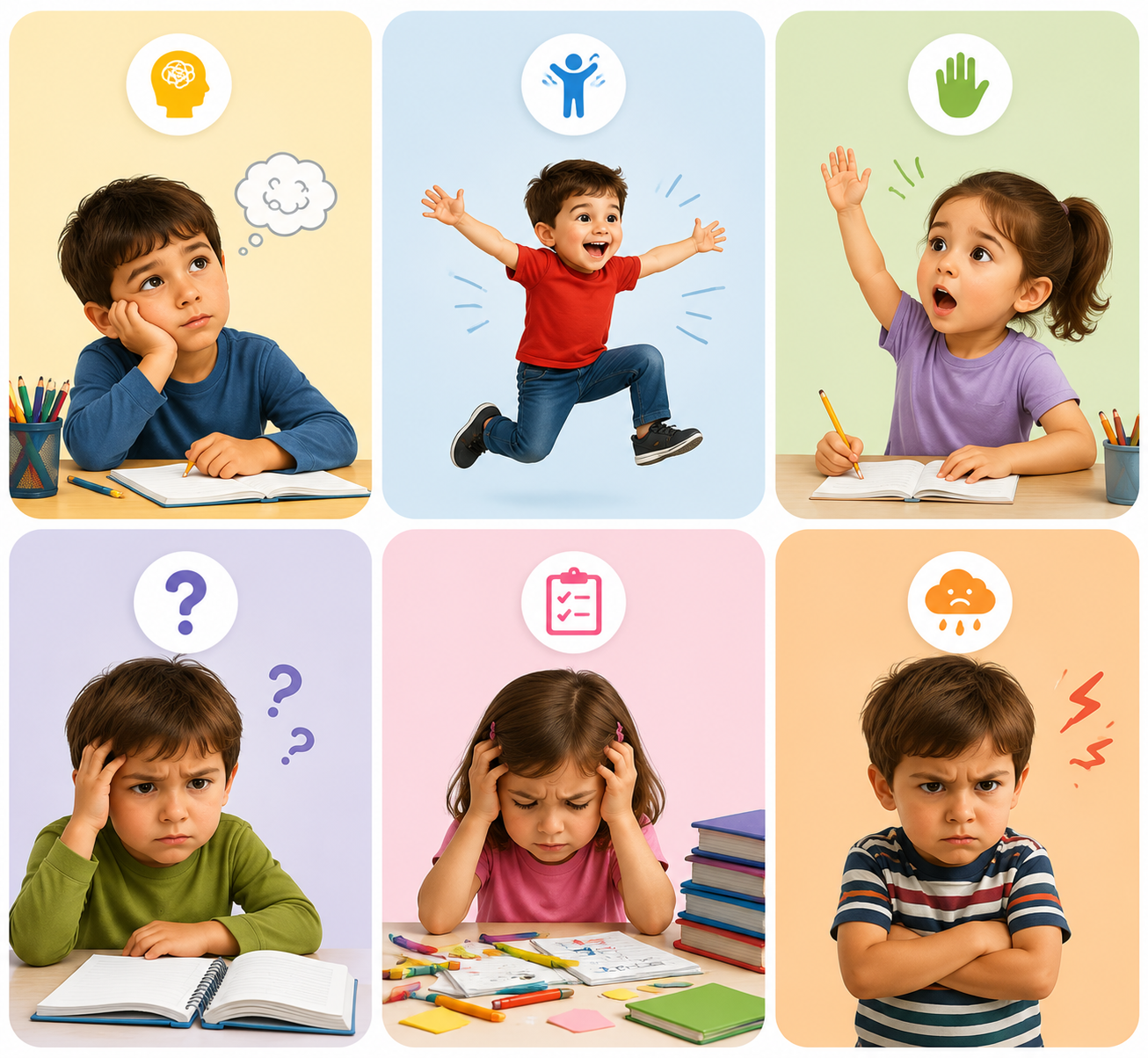
ADHD symptoms centre around three core categories: inattention, hyperactivity and impulsivity. A child who cannot hold focus, one who cannot sit still, and one who acts before thinking may all have ADHD. Sometimes all three patterns show up in the same child. Sometimes just one dominates. These traits typically appear before age 12 and show up consistently across school, home and social settings. Not occasionally. Every day, in ways the child cannot simply choose to stop.
According to Dr. Sushant D. Sarang, Occupational Therapist in Navi Mumbai at Tender Touch Therapy Clinic, “ADHD is often treated as a behaviour problem when the real issue is how the brain is managing attention and impulse regulation. Identifying the specific pattern early changes what kind of support actually helps.”
What Are the Common Signs of ADHD to Watch For?
ADHD does not present the same way across children. One child disrupts the entire classroom. Another sits quietly and fails every assignment because no one can see what is happening inside their head.
Difficulty staying on task: The child starts things but rarely finishes them. Homework takes three hours not because they are slow but because attention keeps slipping away mid-sentence. Teachers describe them as easily distracted or away with the fairies.
Forgetting instructions immediately: A child with inattentive ADHD can hear a two-step instruction and lose the second part before acting on the first. This gets labelled as not listening when the child genuinely cannot hold the sequence.
Constant movement and restlessness: Fidgeting, leaving the seat, running when walking is expected, talking over others. Hyperactive ADHD looks like a child who simply cannot power down. Telling them to sit still without understanding why they cannot is where most interventions fail.
Acting without thinking: Blurting answers out, grabbing things, interrupting, making decisions with no thought of what happens next. Parents and teachers read this as rudeness. It is not. The regulatory system that is supposed to apply the brakes is not doing its job.
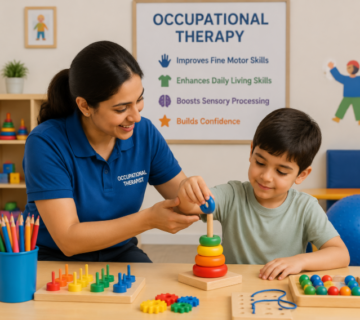
A full occupational therapy assessment identifies which pattern is most disruptive for that specific child before any programme begins. For children where ADHD is affecting school participation and daily function, occupational therapy for ADHD targets the underlying regulatory gaps directly.
How Does ADHD Affect a Child's Daily Life?
Most families seek help well after the difficulties have been building. ADHD does not stay in the classroom. It creates friction across every part of the day, and the load accumulates.
School performance: A child who cannot sustain attention long enough to finish work produces far less than they are capable of. The gap between ability and output is one of the most consistent signs of ADHD in a school setting.
Friendships: Impulsivity and poor turn-taking make social situations hard. Other children find the behaviour unpredictable. The child with ADHD often has no idea why friendships keep breaking down.
Home routines: Getting dressed, packing a bag, sitting through a meal each require a sequence of steps and sustained attention. ADHD makes all of it harder than it looks from the outside.
Self-esteem: A child told repeatedly that they are not trying, not listening or not behaving eventually internalises it. By middle school many children with unidentified ADHD carry significant anxiety on top of the original difficulty.
Sleep: Many children with ADHD struggle to wind down at night. The brain stays activated well past when the day has ended, which compounds everything the next morning.
Early identification matters. Children who get targeted support before secondary school tend to carry fewer secondary difficulties into adolescence. The blog on benefits of occupational therapy for kids with ADHD covers what OT specifically addresses in children with ADHD.
Why Choose Tender Touch Therapy Clinic?
Dr. Sushant D. Sarang is a PhD Scholar in Occupational Therapy with Sensory Integration certification at Level I and IV from the USA. He founded T3 Clinic in 2007 and has built a specialist paediatric team across four Navi Mumbai locations. Six therapists work exclusively with children, and over 2 lakh therapy sessions have been delivered to date.For children presenting with ADHD concerns, the assessment at T3 Clinic goes beyond a standard checklist. It establishes which regulatory systems are most affected, where those gaps are showing up day to day, and what the child’s actual daily environment looks like at home and at school. Therapy is built from that picture. Parents get session updates on what was targeted and what changed. Approaches that are not producing results get replaced.
If your child is showing signs of ADHD, early assessment gives you a clear picture of what is happening and what to do next. Book a consultation with T3 Clinic today.
Early support can make a real difference in your child’s focus and confidence.Book a consultation today to get a clear sensory and ADHD assessment.
FAQs
Can a child have ADHD without being hyperactive?
Absolutely. Inattentive ADHD is the type most often missed, especially in girls who tend to mask well. The child looks fine from the outside, quiet, seated, not causing trouble but is barely absorbing anything in the classroom.
At what age can ADHD be diagnosed?
As early as four, though, most families do not get a clear answer until primary school when the academic and social demands start exposing the gaps. Waiting for a formal diagnosis before seeking assessment is not necessary.
Is ADHD a permanent condition?
The brain does not simply outgrow it. What changes over time is how well a person learns to work around it. Children who get the right support early tend to build those strategies before the demands of secondary school and adolescence hit.
Does occupational therapy help children with ADHD?
It addresses the parts medication does not reach sensory regulation, motor planning, attention stamina and daily routine management.For many children it is the piece that makes everything else work better.
Disclaimer: This blog is for informational purposes only and is not a substitute for professional medical advice.