Behavioral therapy is a structured, evidence-based intervention for children with ADHD that targets specific behavioural patterns through skill-building, routine reinforcement and caregiver training. It does not cure ADHD. What it does is replace patterns that are not working with habits that are, giving the child a better chance of functioning well at home and in school. For many families, it is the intervention that makes daily life manageable before anything else does.
According to Dr. Sushant D. Sarang, Occupational Therapist in Navi Mumbai at Tender Touch Therapy Clinic, “Behavioral therapy works best when it is specific to the child’s actual daily challenges. General strategies applied broadly rarely stick. Targeted approaches tied to real situations do.”
What Does Behavioral Therapy Actually Do for a Child with ADHD?
The goal is not to suppress the child’s energy or change who they are. It is to give them a workable set of responses to situations where ADHD creates the most friction.
Slowing reactive patterns: Before a child with ADHD can respond differently, they need a pause that does not come naturally. That pause is what behavioral therapy builds — slowly, through repetition, until it starts to happen without being prompted.
Routine and structure: A predictable sequence reduces the number of real-time decisions a child has to make. Mornings, homework and bedtime become less volatile when the steps are fixed and familiar rather than negotiated from scratch every day.
Positive reinforcement: Most reward systems fail children with ADHD because the reward comes too late or is too vague to land. Therapy gets specific — the right behaviour, the right response, immediately. Caregivers learn to apply this consistently rather than inconsistently, which is where most home attempts break down.
Caregiver involvement: What happens in the session matters less than what happens every other hour of the day. Parents and teachers learn to respond to difficult behaviour in ways that reduce escalation. That one change — how the adults in the room react — shifts the pattern faster than anything done only in a clinic.
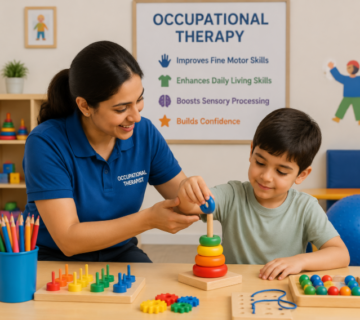
Children with ADHD who also have sensory or motor difficulties respond better when behavioral therapy runs alongside occupational therapy. For children where ADHD is affecting daily function, OT for ADHD addresses the regulatory gaps behavioral strategies alone cannot reach.
How Does Behavioral Therapy Change Daily Life for Families?
Families living with ADHD tend to describe the same handful of breaking points. Mornings derail before 8am. Homework drags into the evening. Any change in plan triggers a meltdown. Bedtime becomes its own battle. Behavioral therapy does not promise to eliminate any of this. What it does is make each of these situations more manageable, one at a time.
The morning tends to shift first. The routine becomes fixed enough that the child can move through it without an adult directing every step. It does not happen quickly but when it does the whole household notices.
Homework is slower to change. A session with a clear start, a time limit and something the child actually wants attached to finishing it works differently to sitting at a desk until it is done. The ADHD brain needs an edge to run toward, not an open-ended instruction to persist.
Transitions catch most families off guard — the gap between one activity and the next is where ADHD children fall apart most visibly. A consistent warning, a predictable cue and the same expectation every time reduces that friction significantly. Not because the child suddenly handles change better but because the change stops being a surprise.
What builds underneath all of this is something harder to name. Fewer standoffs. Less daily conflict. A child who is not constantly failing at things that seem simple. That shift changes how the family functions and how the child sees themselves. For a detailed look at what targeted therapy delivers for children with ADHD, OT benefits ADHD covers the functional gains in depth.
Why Choose Tender Touch Therapy Clinic?
Dr. Sushant D. Sarang holds a PhD in Occupational Therapy and Sensory Integration certification at Level I and IV from the USA. T3 Clinic has been running since 2007 across four Navi Mumbai locations, with six therapists working exclusively with children and over 2 lakh sessions delivered.
Every child presenting with ADHD starts with a full assessment before any programme is designed. It identifies which specific patterns are causing the most disruption and what combination of approaches is most likely to produce change. Parents are involved from the beginning and receive guidance on carrying strategies into daily life at home. What is not working gets replaced.
If your child is struggling with ADHD and daily routines are breaking down, an assessment gives you a clear starting point. Book a consultation with T3 Clinic today.
FAQs
At what age can behavioral therapy start for a child with ADHD?
As early as age three, though at that age the work is almost entirely with the parents rather than the child directly. Sessions become more structured and skill-based as the child gets older.
Does behavioral therapy work without medication for ADHD?
For younger children it is usually the first recommendation before medication is on the table. Some families find it enough on its own. Others combine it with medication and find the two work better together than either does alone.
How long does behavioral therapy take to show results in children with ADHD?
Eight to twelve weeks of consistent sessions is the window where most families start seeing real change. How fast things move depends on how severe the difficulties are and how reliably strategies are applied at home and school between sessions.
What is the difference between behavioral therapy and occupational therapy for ADHD?
Behavioral therapy works on responses, habits and how the people around the child manage difficult situations. Occupational therapy goes a level deeper — to the sensory and regulatory gaps that are driving the behaviour in the first place. Most children with ADHD do better with both.
References
- Improving the Efficacy of Evidence-Based Psychosocial Interventions for ADHD in Children. PMC — https://pmc.ncbi.nlm.nih.gov/articles/PMC11162428/
- Effective Approaches to Managing Behavioral Problems in Children with ADHD: A Narrative Review. PMC — https://pmc.ncbi.nlm.nih.gov/articles/PMC12923175/
Disclaimer: This blog is for informational purposes only and is not a substitute for professional medical advice.